Agentic AI Systems: The Autonomous Future of Artificial Intelligence
Imagine an AI that doesn’t just answer your questions but takes a goal, formulates a plan, executes it across multiple tools, and delivers a finished result. This isn’t a scene from a sci-fi movie; it’s the reality being built today with Agentic AI Systems. As we move through 2026, the conversation around artificial intelligence is rapidly shifting from passive tools to proactive, goal-oriented partners. These systems represent a fundamental evolution in AI, moving beyond simple command-response models to creating digital entities capable of independent reasoning and action.
Agentic AI Systems are advanced artificial intelligence constructs designed to perceive their environment, make independent decisions, and take a sequence of actions to achieve complex, multi-step goals with minimal human intervention. Unlike traditional AI, which waits for prompts, these intelligent autonomous agents are proactive, leveraging reasoning, planning, and tool-use to accomplish tasks that previously required human oversight. This article delves deep into the world of agentic AI, exploring how they work, their real-world applications, and why they are poised to become the cornerstone of the next technological revolution.

How Agentic AI Systems Work: The Logic of Autonomy
At their core, Agentic AI Systems function through a sophisticated loop of perception, reasoning, action, and reflection. This is what separates them from simpler AI models. They are not just pattern-matching engines; they are goal-seeking systems.
The “Reasoning-Acting” Loop
The operational backbone of any intelligent autonomous agent is a continuous cycle:
- Perception & Goal Setting: The agent receives a high-level goal from a user (e.g., “Create a quarterly marketing report for Q2”). It uses its understanding of the world to break this down into a concrete objective.
- Planning & Reasoning: This is the critical phase. The agent engages in a form of “chain-of-thought” reasoning. It devises a step-by-step plan. For the marketing report, this might involve: “Step 1: Pull sales data from the CRM. Step 2: Analyze website traffic from Google Analytics. Step 3: Gather social media engagement metrics. Step 4: Synthesize findings into key insights. Step 5: Draft a report in Google Docs with charts.”
- Action & Tool Use: The agent then executes its plan by leveraging a suite of tools. This is where AI coordination & planning agents shine. They can write and execute code, call APIs, control a browser to navigate websites, or use software applications—all autonomously.
- Observation & Reflection: After each action, the agent observes the outcome. Did the data load correctly? Was the chart generated? If it encounters an error or an unexpected result, it reflects on the problem, adjusts its plan, and tries an alternative approach. This feedback loop is essential for robust autonomy.
The Role of Agentic AI Frameworks
This complex reasoning-acting loop is enabled by specialized Agentic AI frameworks. Projects like AutoGPT and BabyAGI were among the first to popularize this architecture, demonstrating how a large language model (LLM) could be used as a “brain” to direct its own actions. More recently, advanced models like OpenAI o1 with their built-in reasoning capabilities are pushing the boundaries of what’s possible, enabling more reliable and logical planning.
These frameworks provide the scaffolding that allows an LLM to become an agent. They manage the agent’s memory, break down tasks, handle tool execution, and facilitate the critical reflection step.
Key Components and Technologies Powering Agentic AI
Building a functional Agentic AI System requires the integration of several key technologies. It’s more than just a powerful language model; it’s an entire stack designed for action.
1. The “Brain”: Foundational AI Models
The core reasoning capability is provided by advanced Large Language Models (LLMs) and multimodal models. Models like GPT-4, Claude 3, and especially reasoning-optimized models like OpenAI o1 serve as the agent’s cognitive engine. They are responsible for understanding the goal, generating the plan, and making judgment calls during execution.
2. Tools and Function Calling
An agent is only as powerful as the tools at its disposal. Agentic AI Systems are integrated with a wide array of tools via APIs and function calling. This can include:
- Data Tools: Access to databases, CRMs (like Salesforce), and analytics platforms.
- Software Tools: Ability to use browsers, word processors (Google Docs, Microsoft Word), spreadsheet applications, and design software.
- Computational Tools: Code execution environments (Python, JavaScript) to perform calculations or data manipulation.
3. Memory and Context Management
For an agent to complete a multi-step task, it must remember what it has already done. Agentic AI frameworks implement both short-term memory (the context of the current task) and long-term memory (storing learnings from past tasks) to maintain coherence and improve over time.
4. Multi-Agent Collaboration
Some of the most powerful applications involve multi-agent AI systems. In this model, different specialized agents work together. For instance, a “Researcher” agent might gather data, a “Analyst” agent processes it, and a “Writer” agent compiles the final report. The AI coordination & planning agents act as orchestrators, managing the workflow and communication between these specialized agents to achieve a common, complex objective.
AI Agents vs Chatbots: A Fundamental Evolution
To truly appreciate the power of Agentic AI Systems, it’s crucial to understand how they differ from the AI most people are familiar with: chatbots.
| Feature | Traditional Chatbots & Assistants (e.g., ChatGPT, Siri) | Agentic AI Systems (e.g., AutoGPT) |
|---|---|---|
| Core Function | Reactive Response: Answers questions and performs single-turn tasks based on direct prompts. | Proactive Goal Achievement: Takes a high-level goal and autonomously executes a multi-step plan. |
| Autonomy | Low. Requires continuous user input and direction for each step. | High. Operates independently once a goal is set. |
| Scope of Task | Single, discrete tasks. “Summarize this article.” | Complex, multi-faceted projects. “Research our competitors and propose a new market strategy.” |
| Tool Use | Limited or non-existent. May have pre-built integrations (e.g., setting a timer). | Extensive. Can dynamically use a wide range of external tools and APIs. |
| Output | An answer, a piece of text, a generated image. | A finished product: a completed report, a built software feature, an automated workflow. |
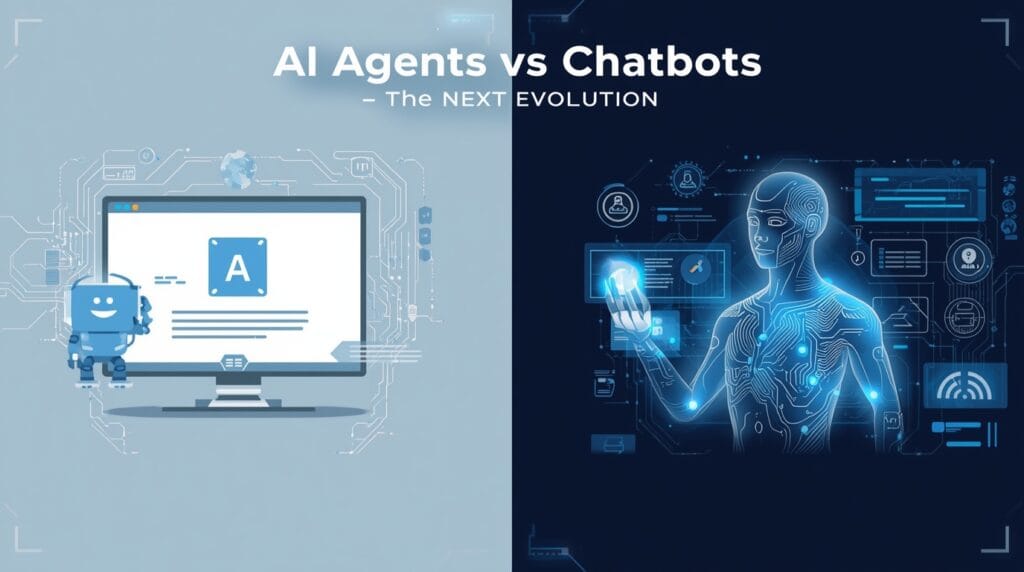
The distinction in the AI agents vs chatbots debate is clear. Chatbots are powerful conversationalists, but Agentic AI Systems are digital workers capable of owning and driving a process from start to finish.
Real-World Use Cases: Agentic AI in Action
The theoretical potential of Agentic AI Systems is vast, but it’s the practical Agentic AI use cases that are driving adoption and investment today.
Revolutionizing Business and Workflow Automation
The role of Agent AI in productivity is perhaps most evident in corporate environments. Multi-agent AI systems are being deployed to automate entire business processes.
- Example: Automated Customer Onboarding: Instead of a human managing a checklist, an onboarding agent could: automatically create user accounts in various systems, provision software licenses, send personalized welcome emails, schedule training sessions, and pull a first-week activity report—all without human intervention.
- Example: End-to-End Report Generation: As mentioned earlier, an agent can be tasked with creating a complex business report. It can autonomously gather data from Salesforce, HubSpot, and Google Analytics, clean and analyze the data, identify key trends, write the narrative, and format it into a presentation deck. This demonstrates the power of AI agents in workflow automation at a profound level.
The Rise of Hyper-Personalized AI Assistants
Beyond the enterprise, Agentic AI Systems are paving the way for truly personalized AI assistants that manage our digital lives.
- Example: The Personal Life Manager: Imagine an agent that you can instruct: “Plan and book a family vacation to Italy for next summer for under $5,000.” The agent would then: research flights and accommodations, check family member calendars for availability, read reviews, book the optimal options within budget, and create a preliminary itinerary. This goes far beyond today’s assistants that simply set reminders or play music.
Building Custom AI Agents for Niche Tasks
The modular nature of Agentic AI frameworks means that companies and even individuals can start building custom AI agents for highly specific purposes.
- Example: A Legal Discovery Agent: A law firm could build an agent trained to sift through thousands of legal documents for specific clauses or evidence, dramatically reducing the time and cost of discovery.
- Example: A Social Media Manager Agent: A small business could deploy an agent that monitors industry news, drafts relevant posts, and schedules them for optimal engagement across different platforms.
Benefits and Challenges on the Agentic Frontier
The adoption of Agentic AI Systems is not without its trade-offs. Understanding both the immense benefits and the significant challenges is crucial.
The Overwhelming Benefits
- Unprecedented Efficiency: They can operate 24/7, executing tasks much faster than humans and freeing up human workers for higher-level strategic thinking.
- Scalability: Multi-agent AI systems can scale horizontally, deploying dozens or hundreds of agents to tackle large, parallelizable problems.
- Reduced Human Error: When properly configured, agents can perform repetitive, complex tasks with perfect accuracy and consistency.
- Enhanced Capabilities: They augment human intelligence by handling the “how,” allowing us to focus on the “what” and “why.”
The Critical Challenges
- The “Hallucination” Problem: An agent’s plan can be derailed if its underlying LLM “hallucinates” a step or a piece of information, leading to nonsensical or harmful actions.
- Cost and Complexity: Running continuous reasoning loops with powerful LLMs and numerous API calls can be computationally expensive. Building custom AI agents also requires significant expertise.
- Security and Safety: An autonomous agent with access to tools and the internet is a powerful entity. Ensuring it cannot be hijacked or prompted to perform malicious actions is paramount.
- Ethical Decision-Making: As these systems take on more responsibility, who is accountable for their mistakes? The ethical implications of AI coordination & planning agents making real-world decisions are profound and still being explored.

The Future of Agentic AI Systems: Collaboration, Innovation, and Integration
The trajectory for Agentic AI Systems points toward even greater integration, intelligence, and specialization.
The Rise of Agent Swarms and Human-AI Collaboration
The future lies in sophisticated multi-agent AI systems, often called “agent swarms.” We will see ecosystems of highly specialized agents—a designer agent, a coder agent, a tester agent—seamlessly collaborating on projects under the supervision of a master orchestrator agent. The true power will be in human-AI collaboration, where a human manager provides high-level strategy and oversight, while a team of AI agents handles the execution.
Next-Generation Frameworks and Improved Reasoning
Agentic AI frameworks will become more robust, user-friendly, and efficient. We will see a new wave of startups and open-source projects focused solely on solving the challenges of memory, planning reliability, and cost. The development of more powerful reasoning models, following the path of OpenAI o1, will be a key driver, reducing errors and increasing the complexity of tasks agents can handle.
Pervasive Integration and the Invisible Assistant
Ultimately, the most successful Agentic AI Systems will become invisible. They will be embedded in our operating systems, enterprise software, and smart devices, working quietly in the background to manage our workflows, optimize our schedules, and preemptively solve problems. The concept of a personalized AI assistant will evolve from a chatbot you talk to, to an ambient intelligence that manages your digital life.
Conclusion: Stepping into an Agentic Future
Agentic AI Systems are not merely an incremental improvement in artificial intelligence; they represent a paradigm shift. They mark the transition from AI as a tool to AI as an active, goal-oriented partner. By combining advanced reasoning with the ability to take action in the digital world, these intelligent autonomous agents are set to redefine the boundaries of automation, productivity, and creativity.
While challenges around safety, ethics, and cost remain, the momentum is undeniable. From transforming AI agents in workflow automation to creating truly personalized AI assistants, the potential applications are as vast as our imagination. As frameworks mature and models become more capable, the act of building custom AI agents will become more accessible, empowering businesses and individuals alike. The future of automation is not just automated tasks; it’s automated thinking, planning, and doing. The age of Agentic AI Systems has begun, and it will fundamentally shape how we work and live for decades to come.